A centrifugal microfluidic chip that captures individual mammalian cells in trap pocket and relocates them into shared co-location chamber via 90° mechanical indexing — no on-chip valves required.
Key concept — two distinct locations
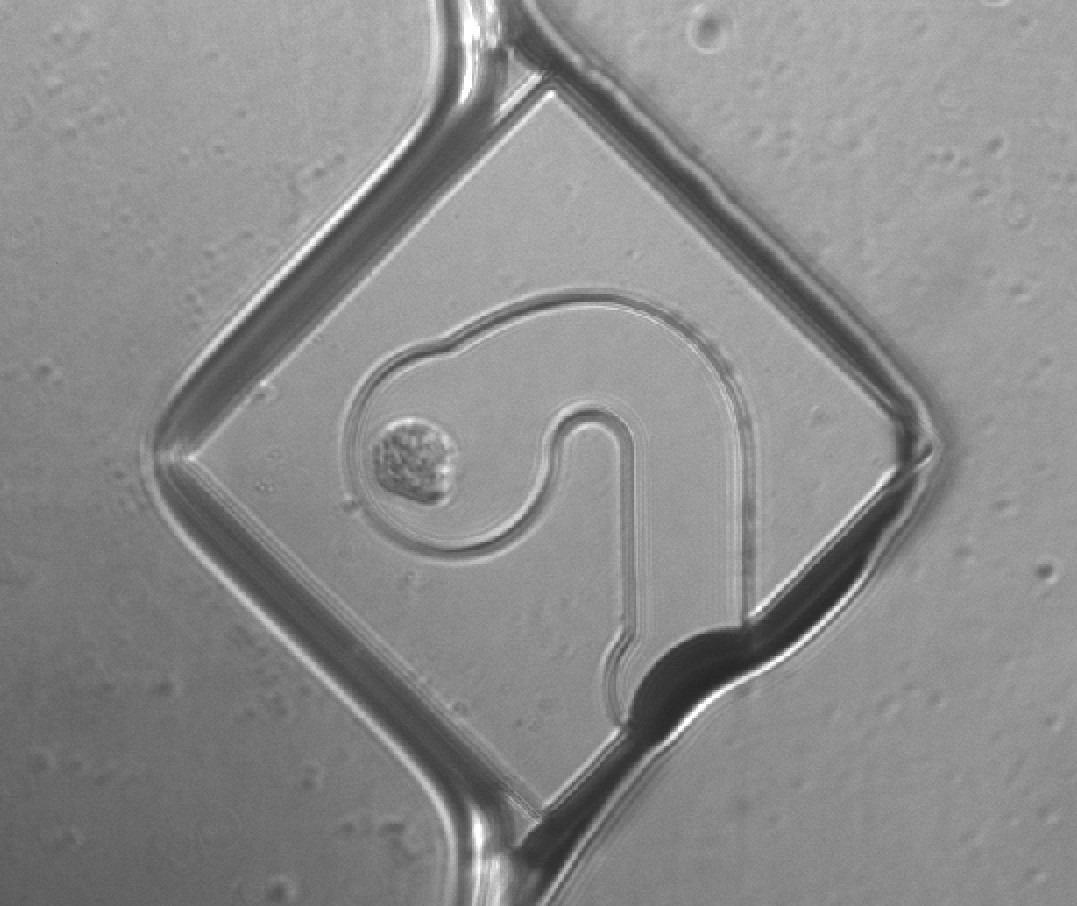
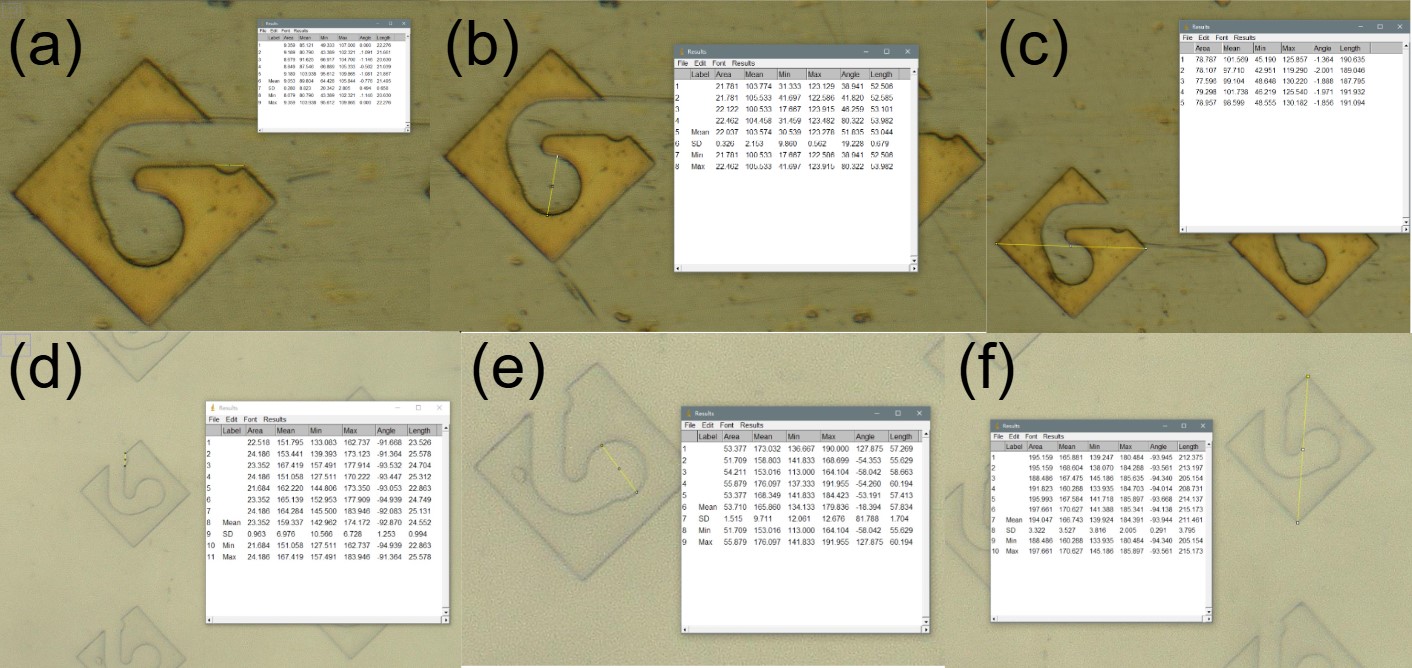
A trap pocket (24.55 µm aperture) is the capture site — it holds exactly one cell during spinning. A co-location chamber (57.83 µm diameter) is the shared storage site downstream. After 90° indexing, the centrifugal force re-aligns with a 30 µm transfer channel connecting the two — cells are driven by centrifugal sedimentation from the trap pocket through the transfer channel into the co-location chamber. The trap pocket is then empty and ready for a second cell population.
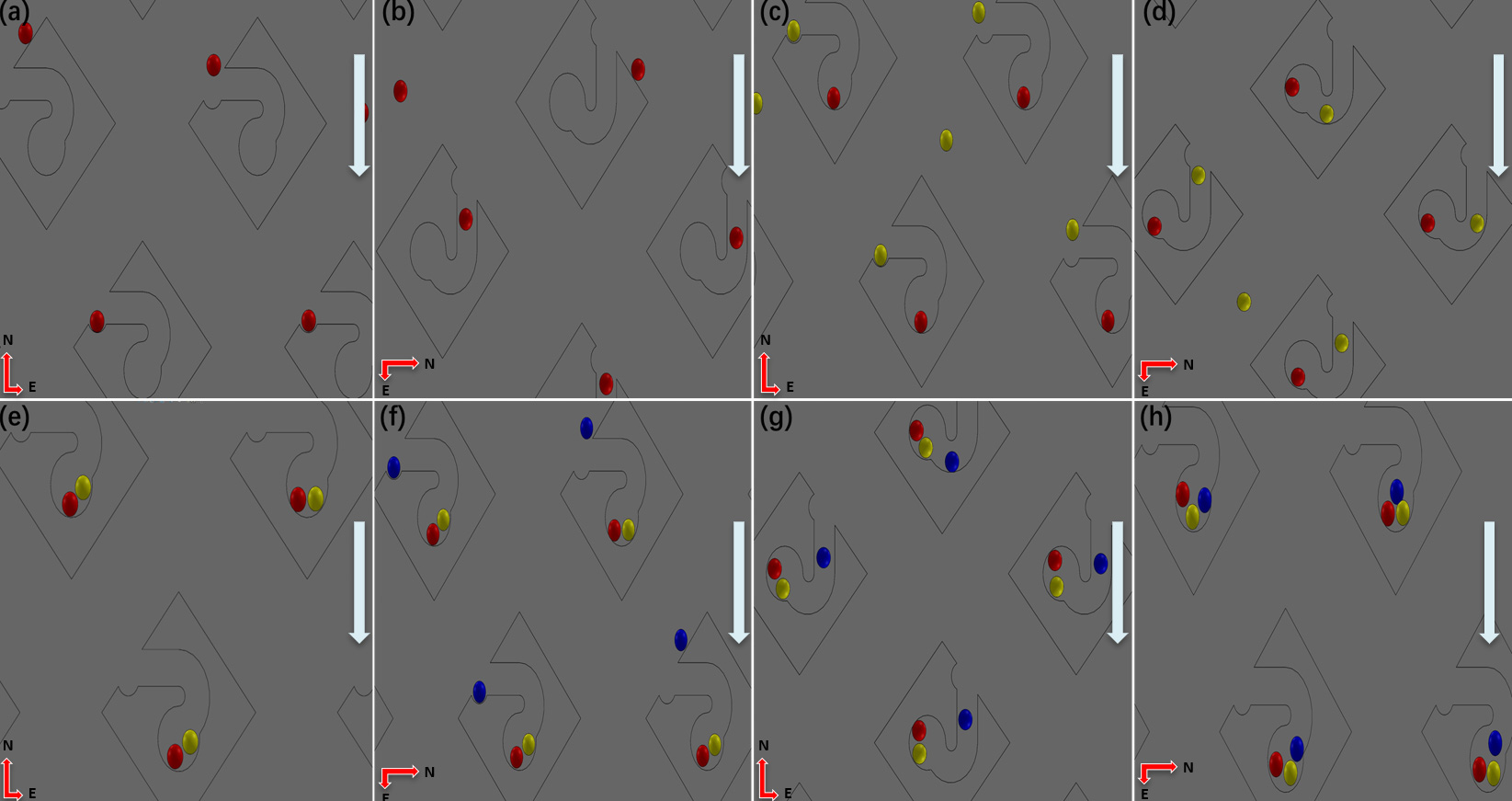
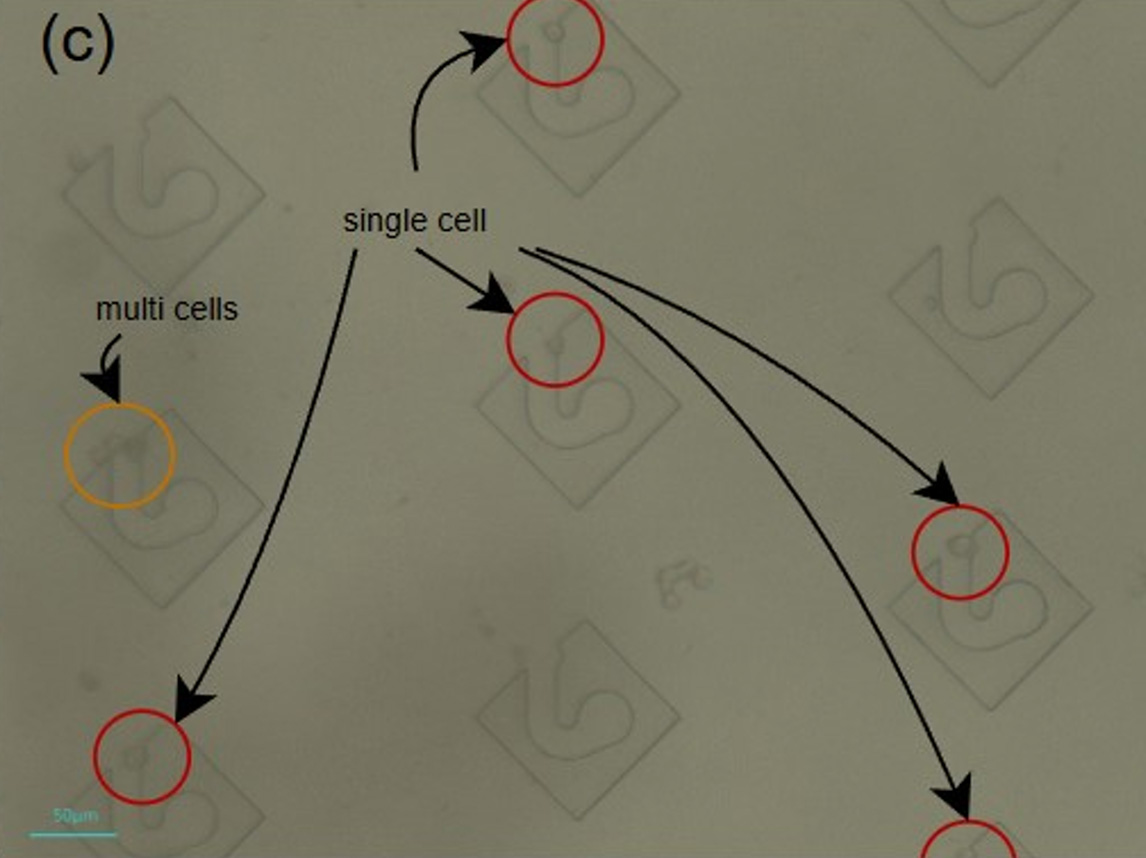
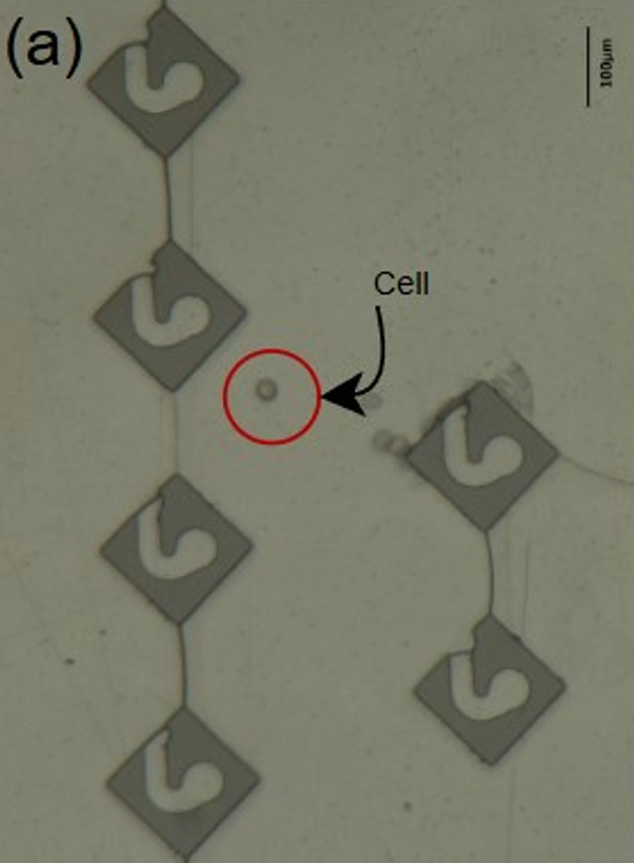
Platform at 0°. 5 Hz centrifugal force (≈ 5.4 g) drives cells into the 24.55 µm trap pocket. A lodged cell acts as a hydrodynamic plug, steering subsequent cells to neighbouring empty trap pockets.
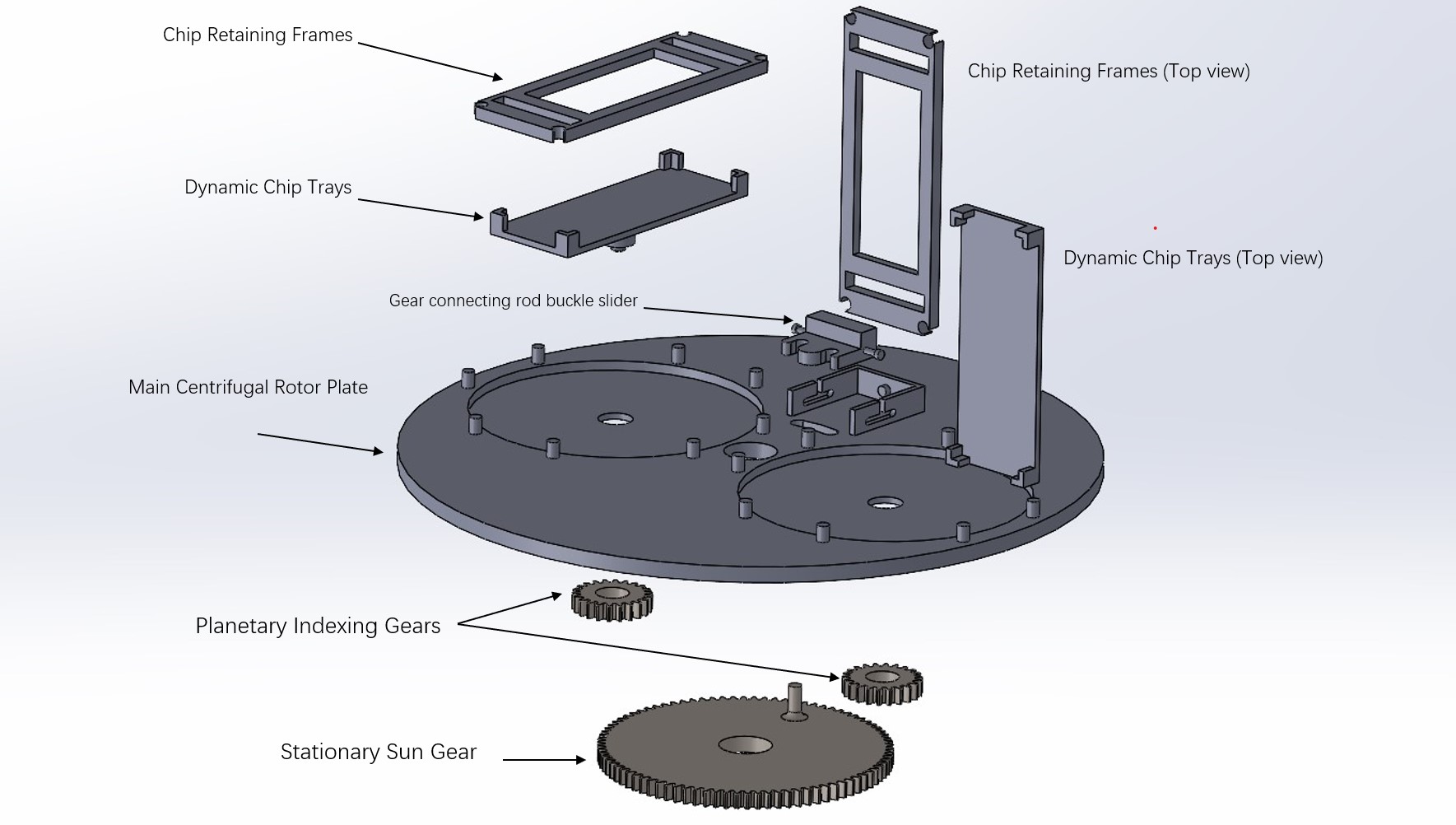
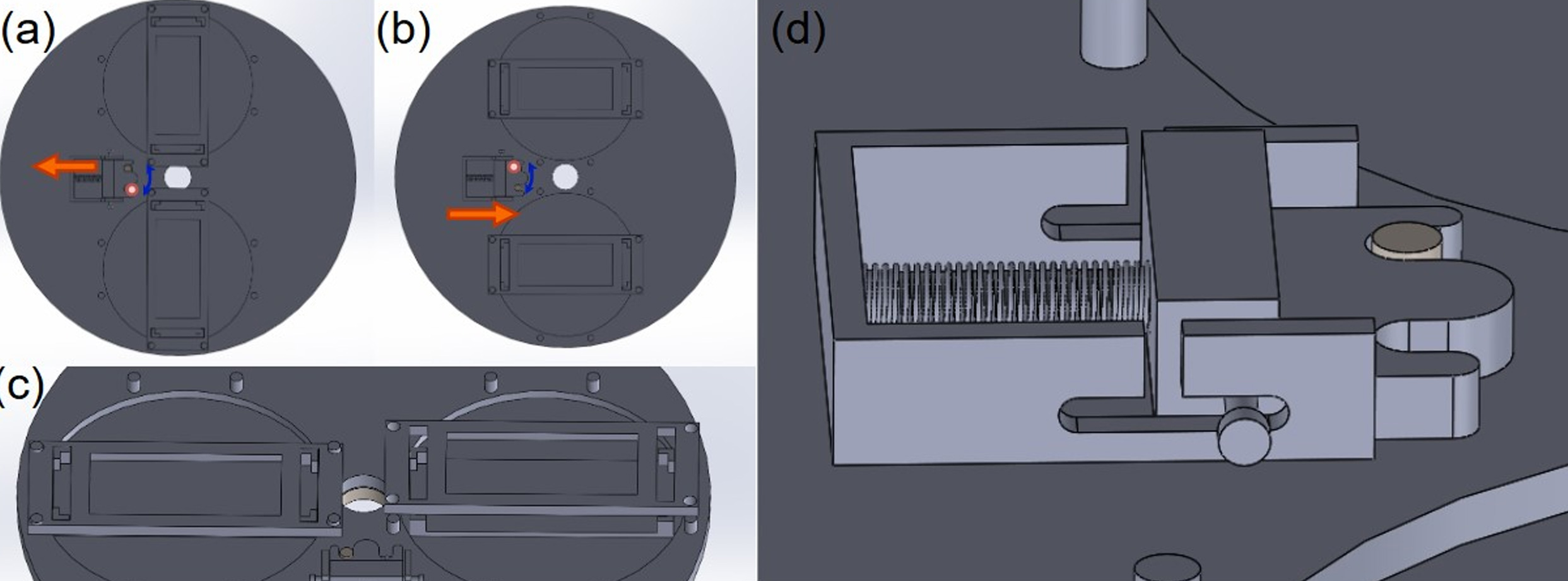
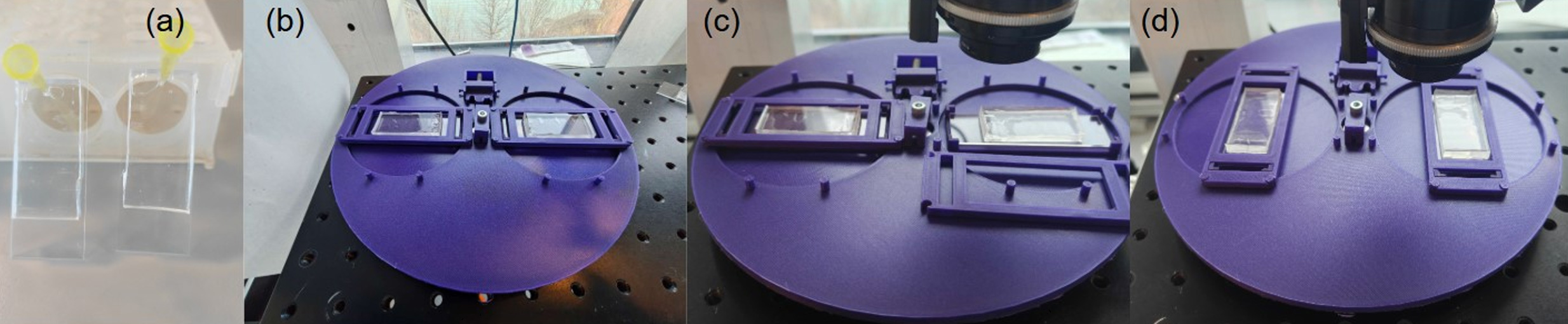
Spring-loaded latch actuates the 86:22 gear train, rotating the chip carrier exactly 90° and aligning the centrifugal vector with the internal transfer channels.
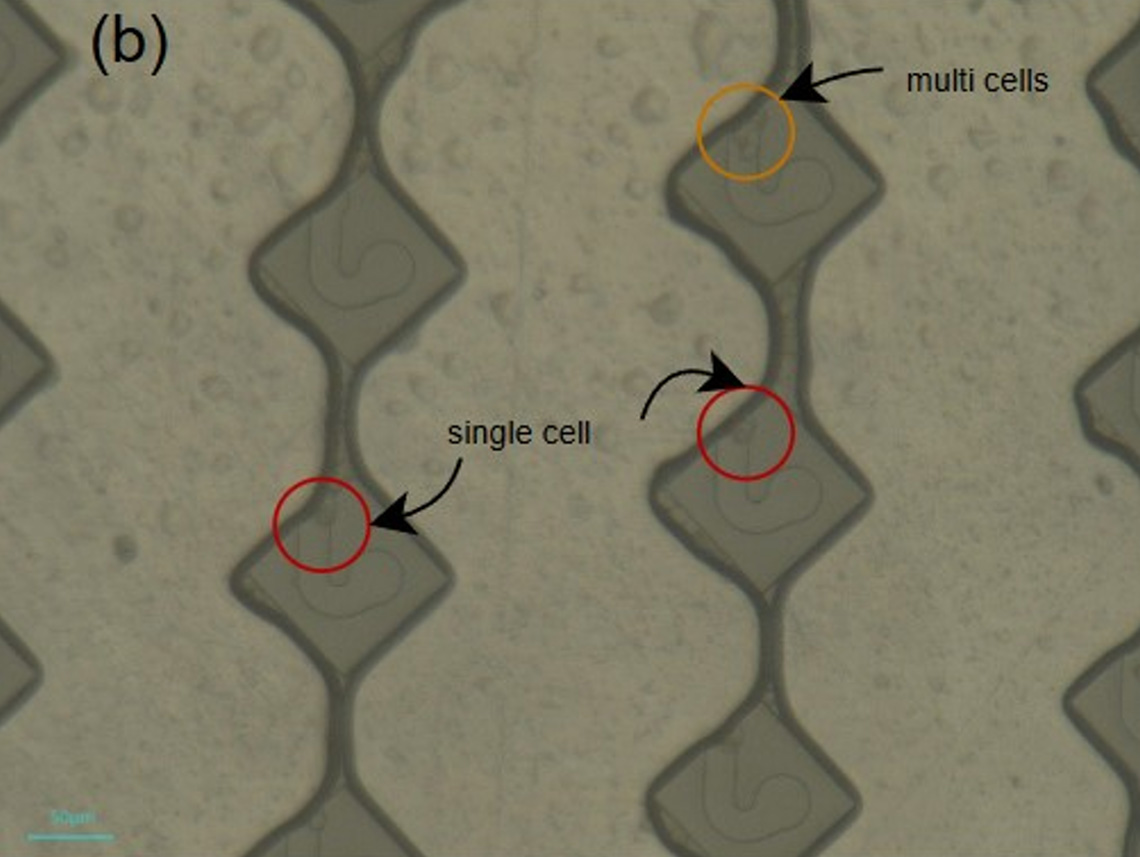
The same body force pushes captured cells through the 30 µm transfer channel into the 57.83 µm co-location chamber — trap pockets are now empty for a second cell population.
Two parallel workstreams: PDMS soft lithography and custom rotational platform design.
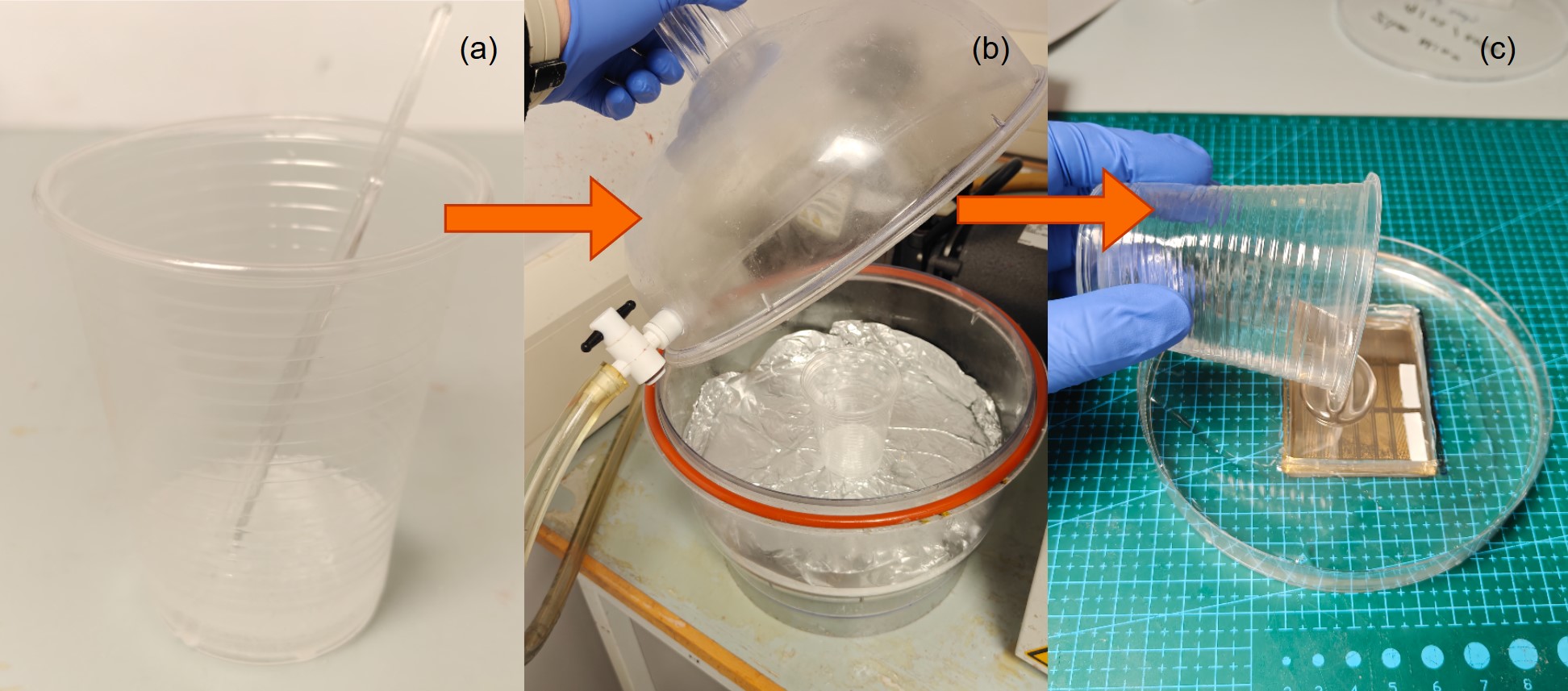
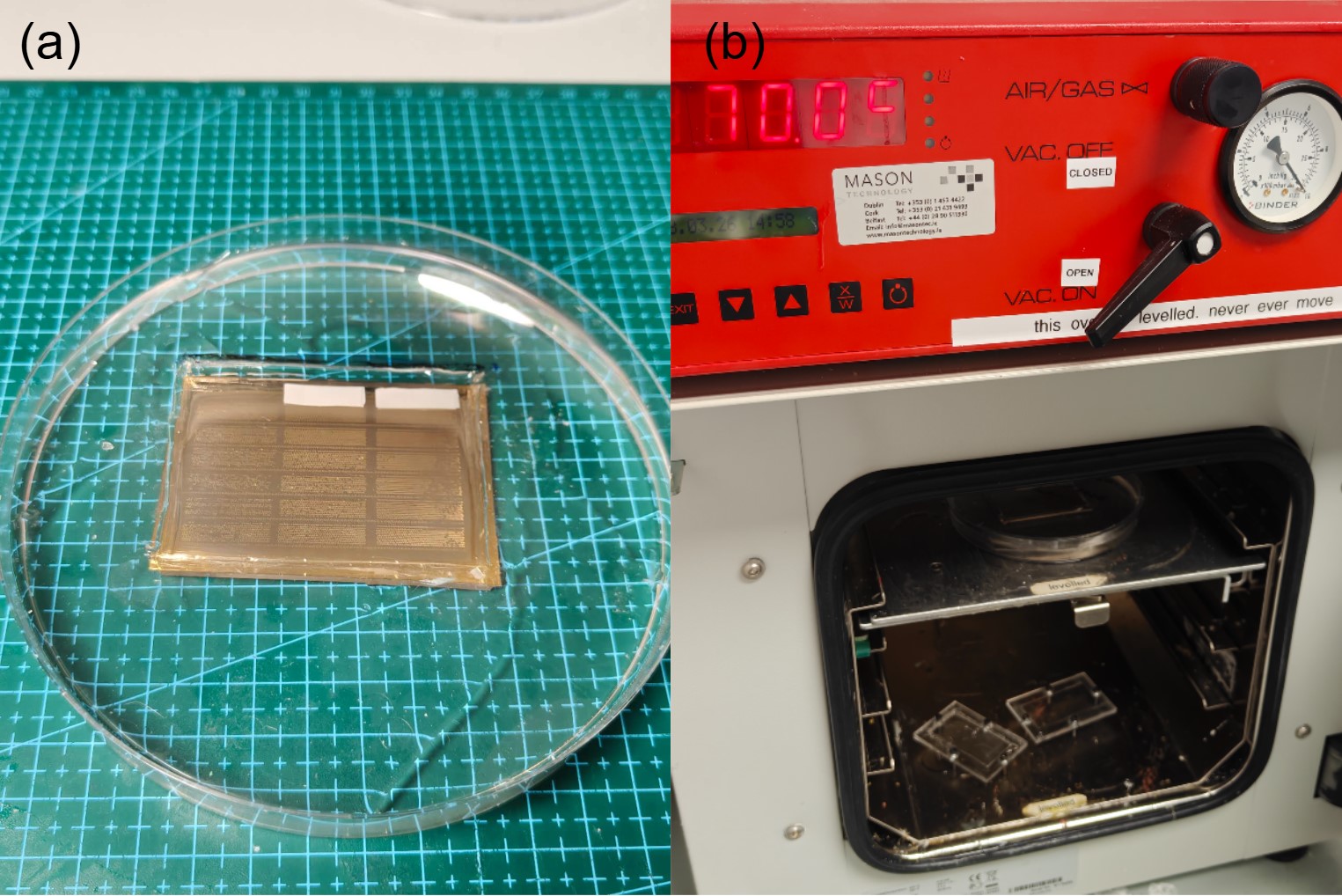
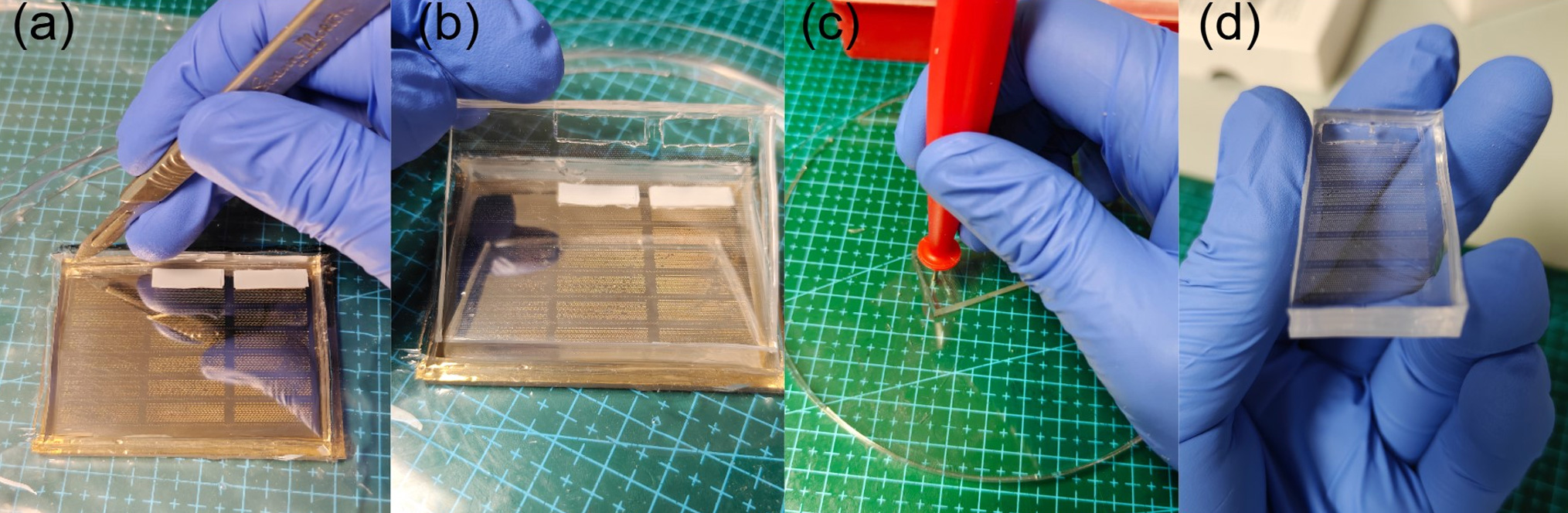
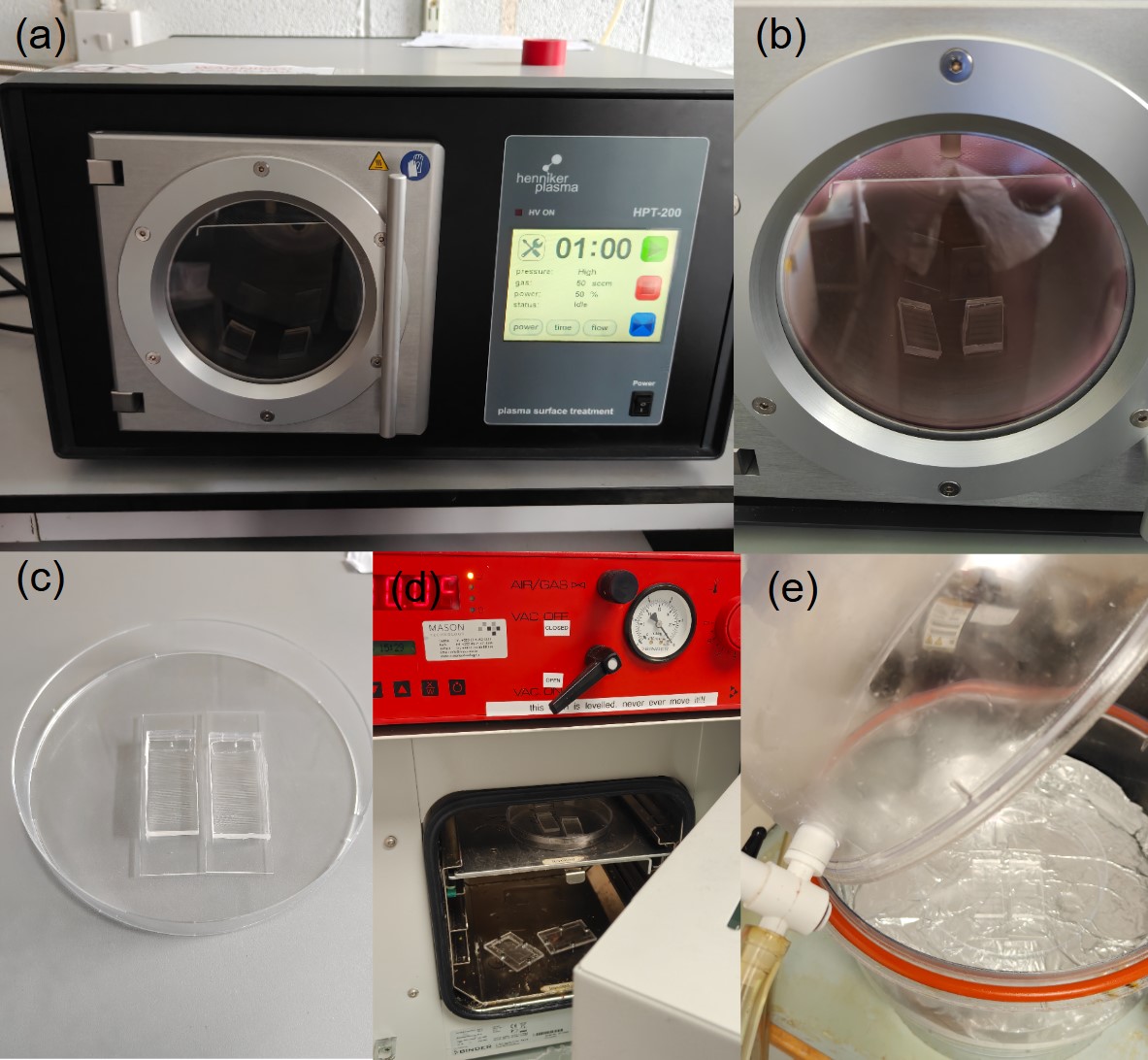
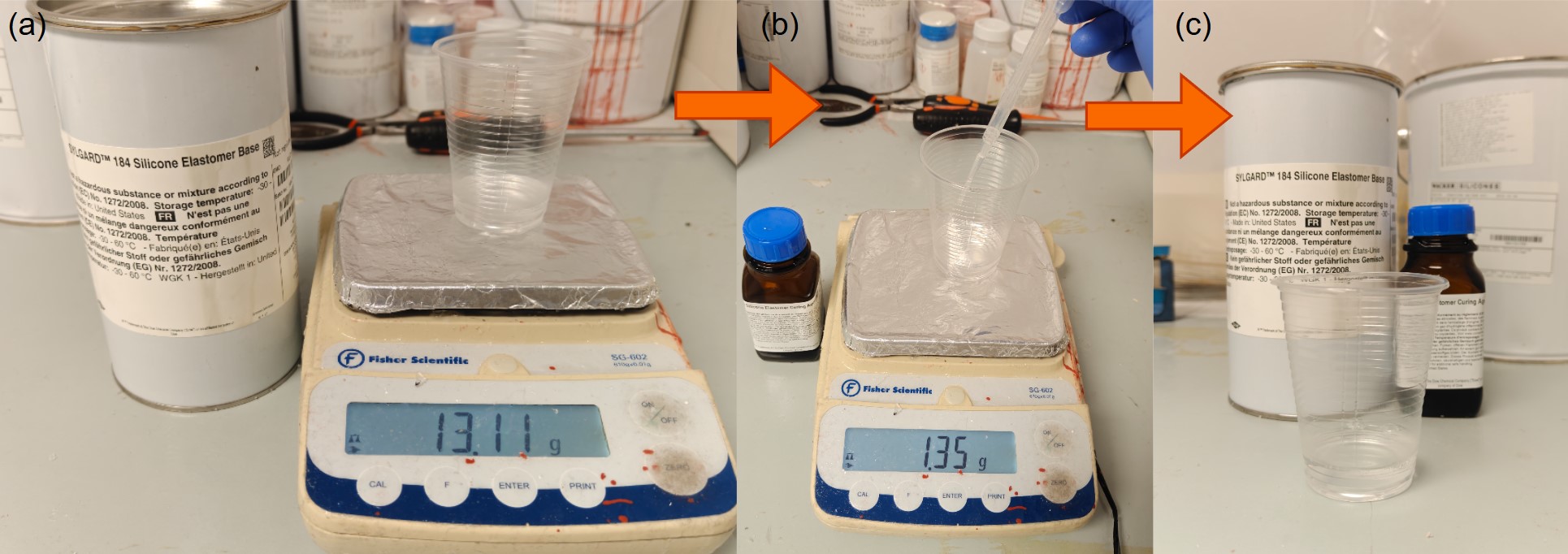
Sylgard 184 (10:1) cast against a laser-engraved Ni master, vacuum degassed, cured at 70 °C for 2.5 h, demoulded, and oxygen-plasma bonded to glass. A 45-min vacuum priming cycle wets all dead-end features before cell loading.
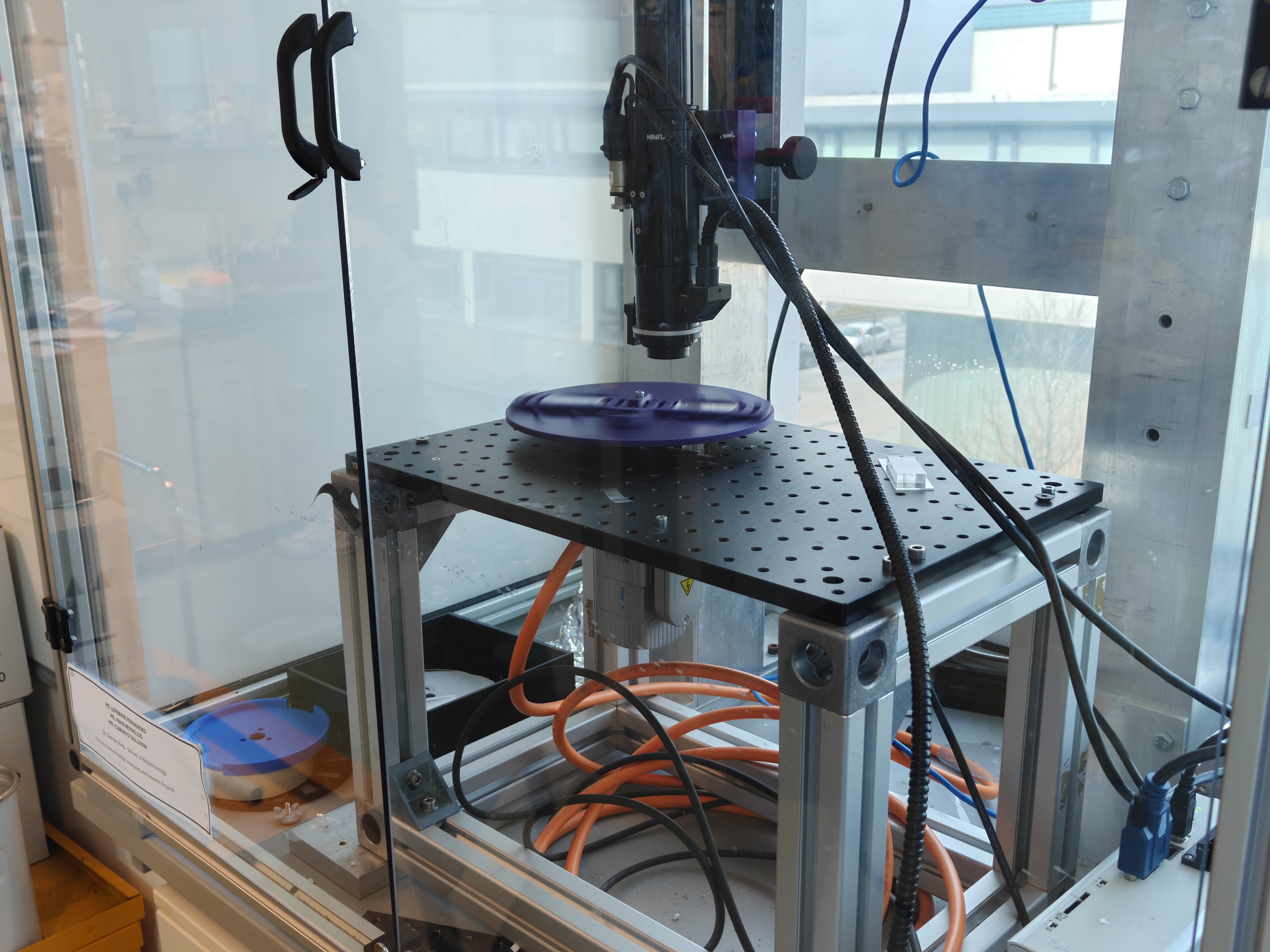
Iterative SolidWorks design FDM-printed in PLA. V1 used a full-coverage retainer plate; the final version introduced a spring-loaded latch and local chip covers, enabling tool-free 90° indexing with four locating pins to eliminate backlash.
Fixed mammalian cells (15–20 µm) in PBS, spun at 5 Hz (≈ 5.4 g) for 12 minutes per loading phase.
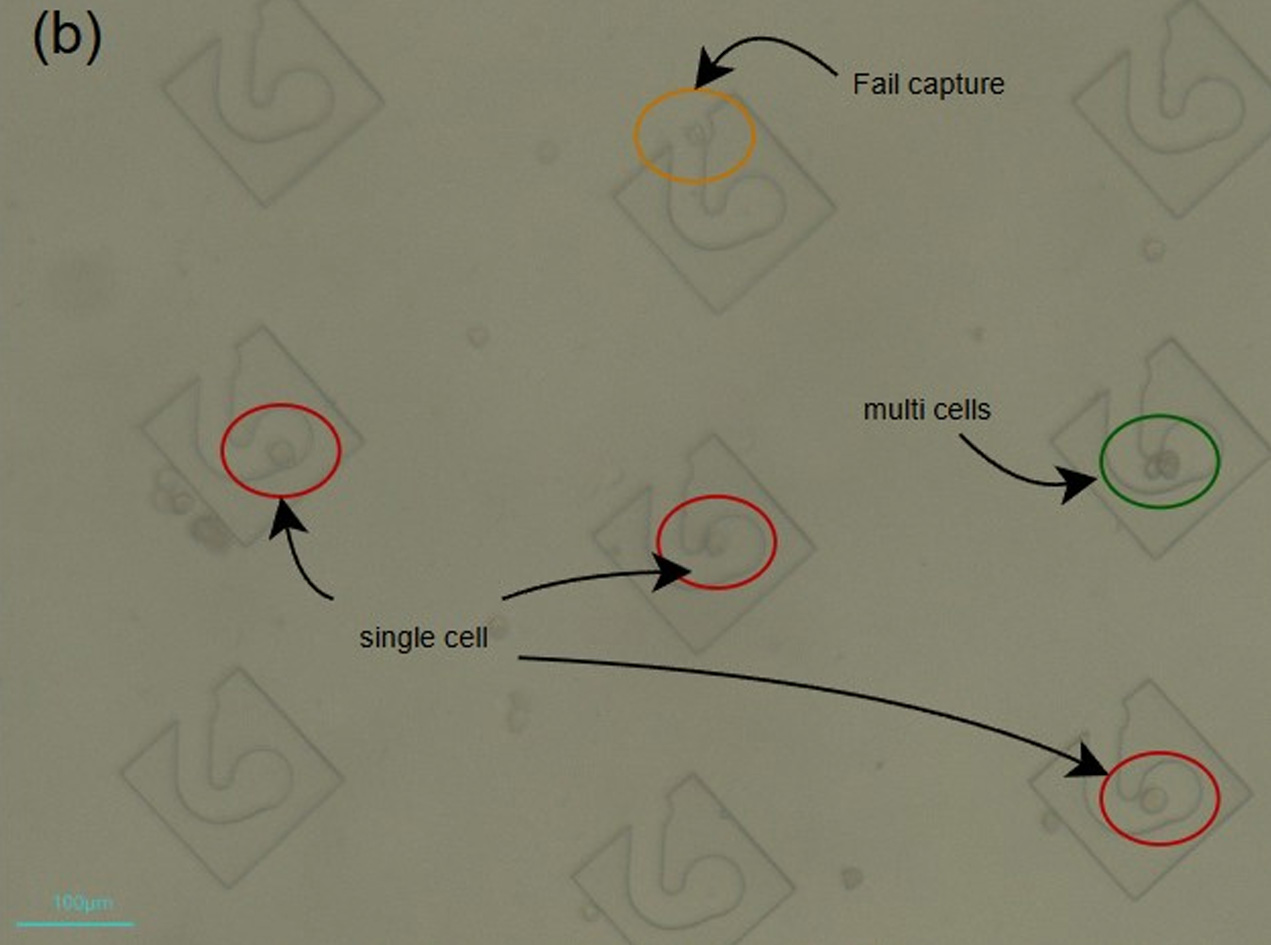
Individual cells lodged in the trap pocket act as hydrodynamic plugs, diverting subsequent cells to neighbouring empty pockets — confirming deterministic single-cell capture above Poisson-loading occupancy in the wetted distal region.
After 90° indexing, cells were driven through the 30 µm transfer channel and remained stably confined in the low-shear co-location chamber — a proof-of-concept for deterministic, valve-free cell routing on a centrifugal platform.
"This project gave me end-to-end research experience: translating a vague brief into measurable engineering objectives, owning a complete soft-lithography fabrication workflow, and using quantitative metrology to interpret experimental results. Designing the 3D-printed indexing platform through two full iterations — identifying a kinematic symmetry limitation and implementing a practical manual workaround — was a direct lesson in pragmatic engineering decision-making under real project constraints."
SolidWorks CAD
Platform design & drawings
FDM 3D Printing
PLA structural components
Soft Lithography
PDMS chip fabrication
Keyence Microscopy
Planar metrology (ImageJ)
Gear Mechanism Design
86:22 spur gear indexing
Plasma Bonding
PDMS-to-glass sealing
Risk Assessment
BSL-1, COSHH, rotating safety
Technical Writing
MEng thesis, DCU 2026
Full Thesis
PDMS Microfluidic Chip for Multi-Cell Capture and Storage. Full dissertation including literature review, methodology, results and conclusions.